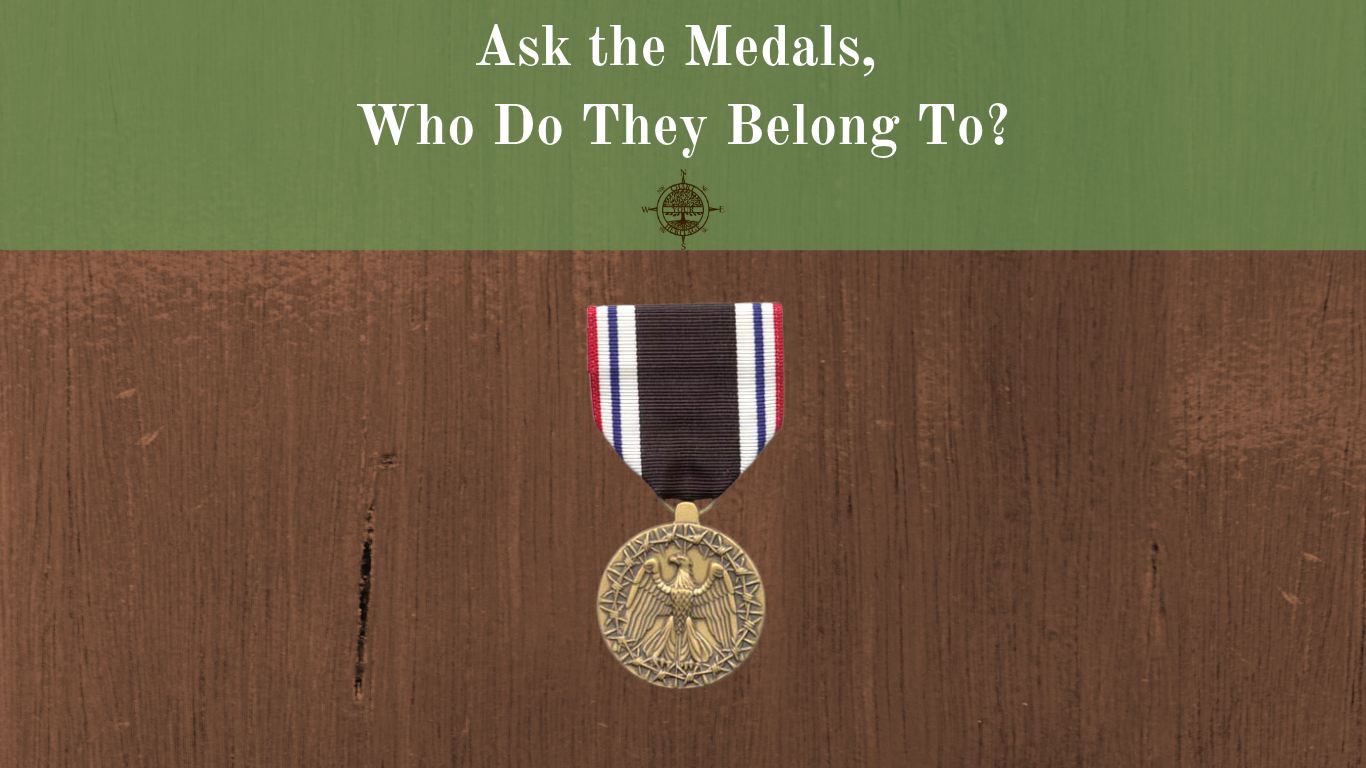
Are you the inheritor of things? If so, you may have received a box (envelope, file folder, cigar box, etc.) from one side of the family containing bits and bobs that have been passed down for generations or just recently added. In one envelope of “things” I pulled out a jumble of medals/ribbons with nothing identifying any of it.
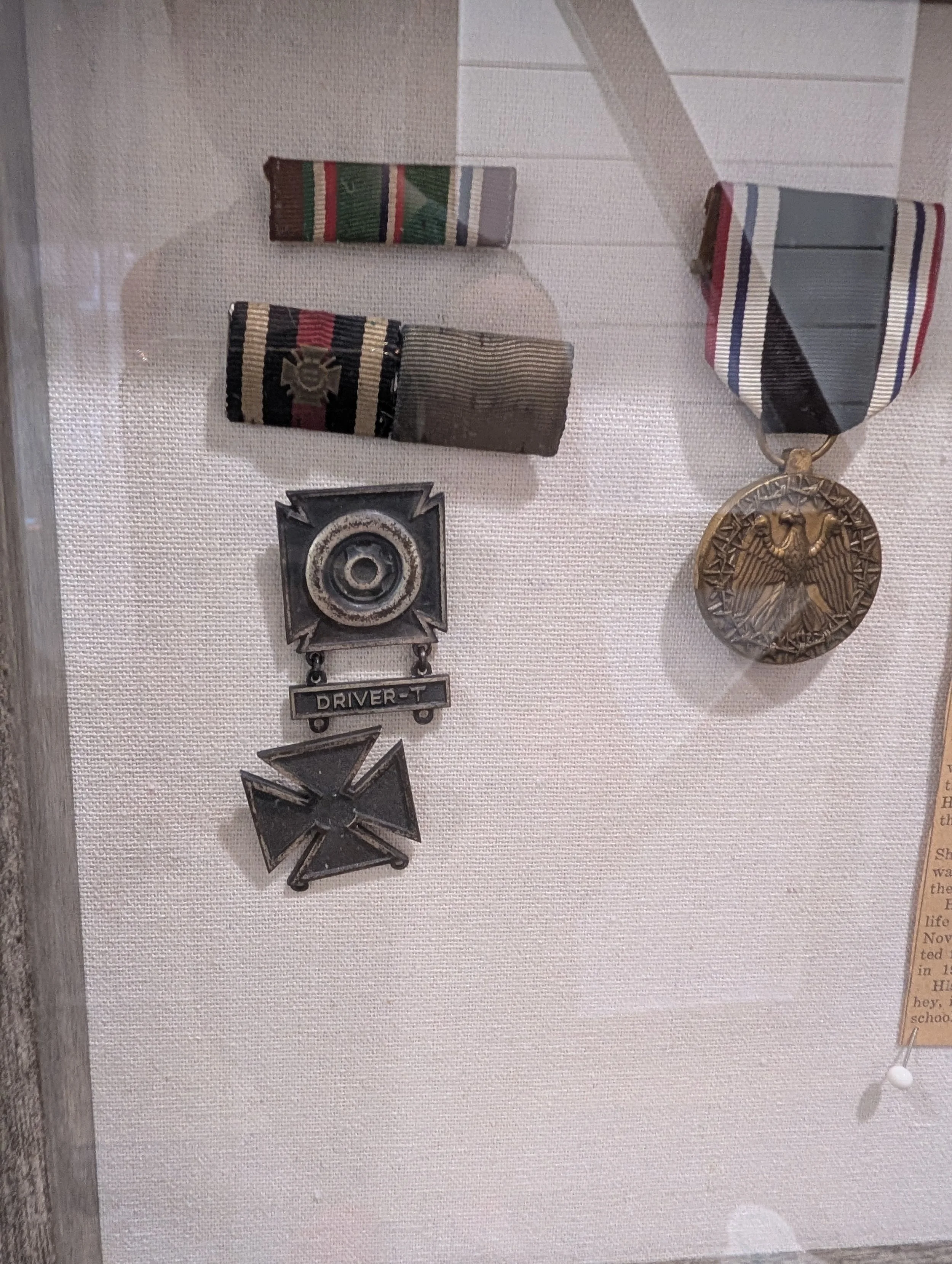
Thankfully, I have some knowledge of the veterans on that side of the family, so I could make educated guesses about who these belonged to. With the help of my AI assistant, Claude (also employee of the year!), I could quickly match up most of these mementos of service (and wars) past.
Medal with eagle and barbed wire: U.S. Prisoner of War Medal. This is easy. It belonged to my Great Uncle Donald Danehey, who was a prisoner of war during World War II. I have memories of my Great Uncle Donald. He taught me to count in Japanese, which he had to learn during his time in the Japanese POW camps.
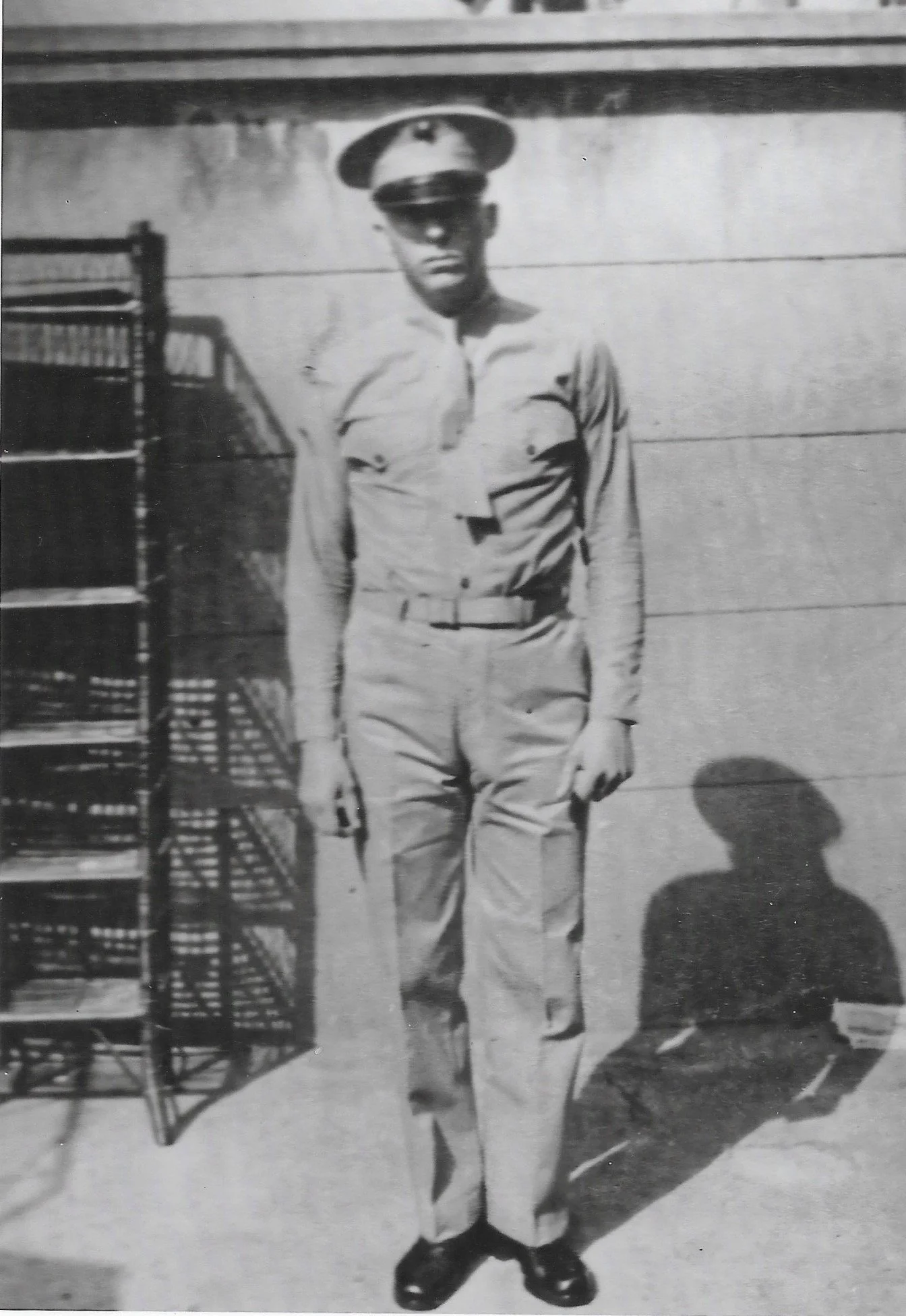
Donald E. Danehey
From Claude: The eagle is encircled by barbed wire. The medal wasn’t created until 1985 and was awarded after the fact, so someone applied for it decades after the war. That application could be a useful paper trail.
Badge with “DRIVER-T” bar: U.S. Army Driver and Mechanic Badge. I know my Grandma Dora’s older brother, Roy Dye, was a driver in the U.S. Army during World War II. If this was Roy’s the “T” indicates he drove tracked vehicles, such as tanks or half-tracks. He never married or had children, so this was likely passed to his sister after his death.
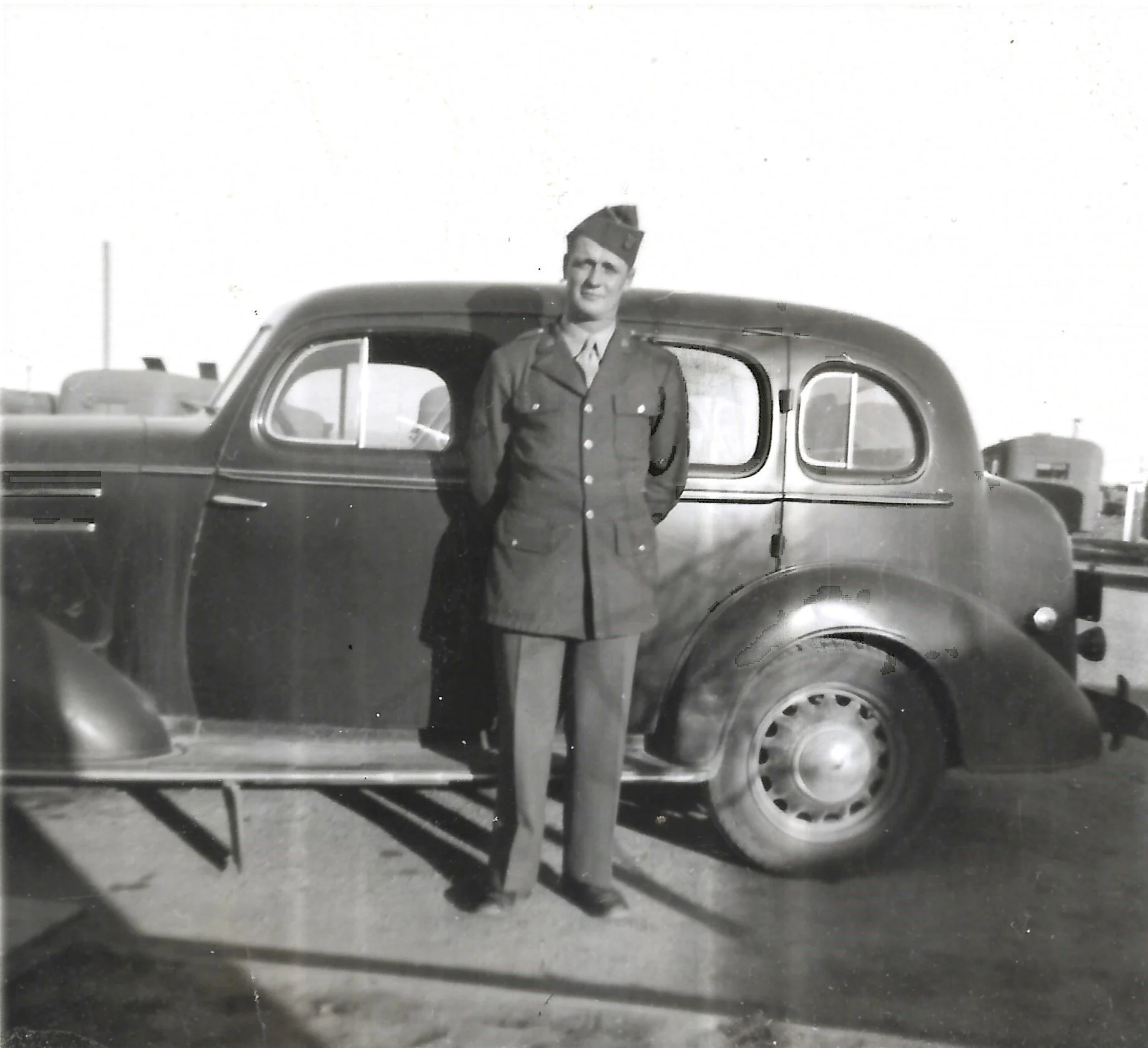
Roy Dye
From Claude: The center is a vehicle wheel and tire, not a target. “T” means tracked vehicles, such as tanks or half-tracks.
Plain cross badge: U.S. Army Marksman Badge. This one is less certain; however, my hypothesis is that it belonged to my Great Uncle Owen Danehey. He served in the U.S. Army during World War II. One of his letters to his mother, passed down in the family, indicates he was a good shot. He was an Antiaircraft Machine Gunner and his discharge papers indicate he was a “Rifle Marksman.”
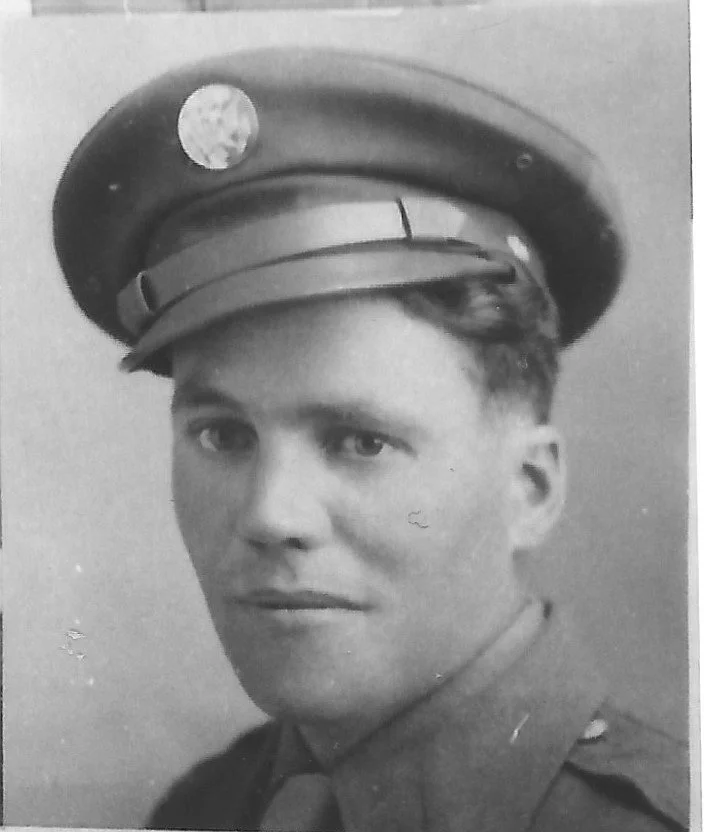
Owen Danehey
From Claude: This is the basic marksmanship badge. Its qualification bar, which would name the weapon, is missing.
Top ribbon bar (probably): European–African–Middle Eastern Campaign ribbon. This could have belonged to Roy Dye or Owen Danehey, as they both served in Europe during World War II. Owen’s discharge papers state he received the EAMET Ribbon along with the American Theater Ribbon, Good Conduct Medal, and Victory Ribbon. Owen never married or had children, so, again, this likely passed to his brother Gene after his death. Perhaps other surviving siblings received the other ribbons and medal?
From Claude: The brown edges, green field and thin colored center stripes look like the WWII EAME Campaign ribbon. The pale blue and gray section on the right looks like a second ribbon that has faded badly. I can’t identify that one from the photo.
Middle ribbon bar: German Honour Cross of the World War 1914/1918 (the “Hindenburg Cross”). This one surprised Claude (since he knows my family history well at this point) and me. It is actually two ribbons. The one on the left has the “Hindenburg Cross” on it, a German award created in 1934 to honor World War I service. I do not know of any ancestors who served in the German Army during World War I. Perhaps this is a “souvenir” brought back by one of the service members after their tour in Europe during World War II? It could have belonged to Roy Dye or Owen Danehey.
From Claude: The stripes are black, white, black, red, black, white, black, which matches this German award; the white has aged to cream. Germany created the award in July 1934 to honor World War I service. The tiny cross pinned to the ribbon suggests the combatant version, which has crossed swords between the arms of the cross. Look at it under a loupe: crossed swords would mean a front-line veteran. A gray ribbon is attached to the same bar, likely a second German award.
I like to keep this shadow box in my entryway, as a reminder of my Uncle Donald and the other veterans in my family history. I think of their stories. Not just their service stories, but of their lives before and after. And, of course, I need to do more research to solve the questions that remain.
This Veterans Day, open your own family's box of things. If you find medals with no names attached, Chart Your Heritage can help you identify them and track down the records behind them.