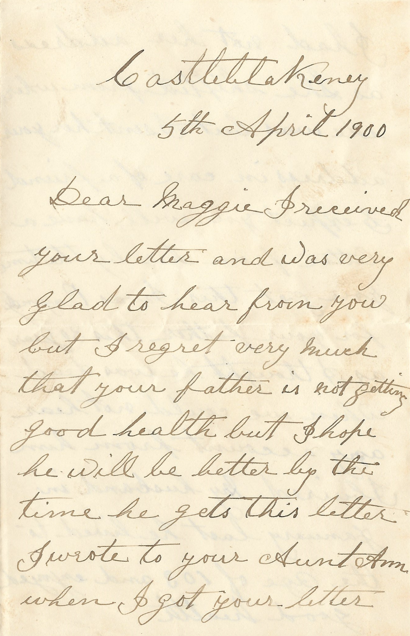
Our Irish ancestors left us with an unique puzzle that can take years to put together – and often only accomplished with some luck and creativity. I was lucky enough to inherit a letter from my great grandmother’s Irish family sent to her in 1900. When I opened that fragile envelope, buried in a box of other family paraphernalia, I was overcome with a profound sense of discovery. The letter had been read before, likely my Grandpa Danehey and his siblings knew about it, but the information contained within had failed to reach my generation, if not my father’s. The words of a long lost Aunt echoed from more than a hundred years before. The family had thought my second great grandfather dead, and without his daughter’s letter, he would likely have been considered lost to the American wilderness. That scrap of paper, that somehow survived generations of neglect, revealed my second great grandfather’s home in Ireland, and his family. That one postmark opened up the connection to the siblings he left in Ireland, and even those who immigrated to England.
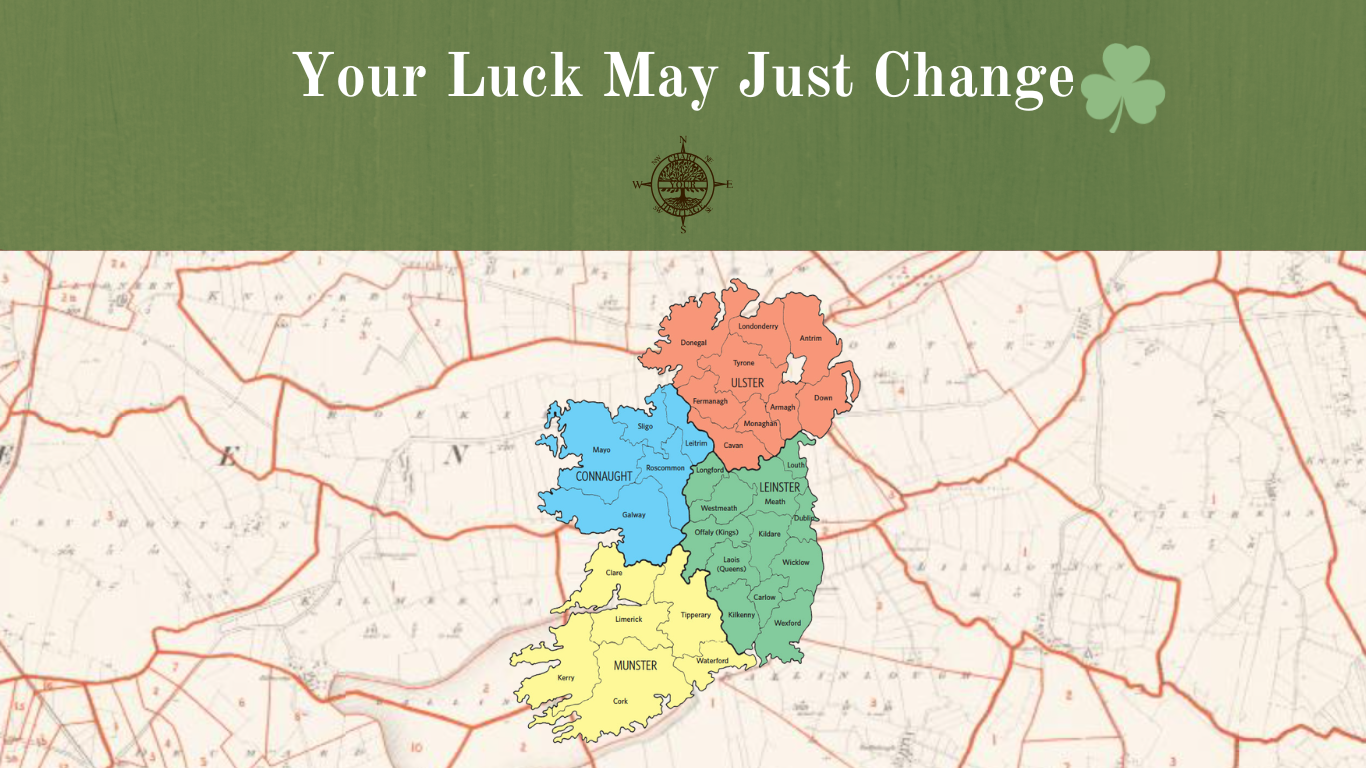
If you have done any Irish genealogy research, you know the pain that island can present. The absolute frustration of “Ireland” after “Ire” listed on US census records and death certificates. The missing maiden names or “unknown” included under family. Then, if you are lucky to find something other than Ireland, deciphering the tortured spelling, or locating the correct location in a sea of multiple same named townlands and parishes spanning the length of that Emerald Isle.
If you can make it to your ancestor’s townland (the most ancient and local jurisdiction generally used for identifying a family’s or person’s origins) you run into the scarcity of Irish records. Other than the barest fragments, census returns prior to 1901 are not extant in Ireland. In 1922, at the onset of the Irish Civil War, the Public Records Office in Dublin, housing the census returns along with countless other records, burned, destroying these links to the past. Copies of the census had already been destroyed, leaving a gaping hole in our Irish family records. Civil records were not kept for all religious affiliations until after 1864. Roman Catholic parish records can be missing due to fire, loss, and anti-Catholic sentiments.
Certainly, there are substitutes that we may use to map out Irish families. The Griffith’s Valuation (a census-like substitute listing heads of households around 1855), the Tithe Applotment Books (1823-37), and Valuation Office House books (all digitally available) should all be included in a research plan. But these substitutes often fall short. In so many cases the connection between Irish immigrants and their families in Ireland has been severed. Perhaps it is this loss that has Americans with even a drop of Irish ancestry so passionate about their heritage.
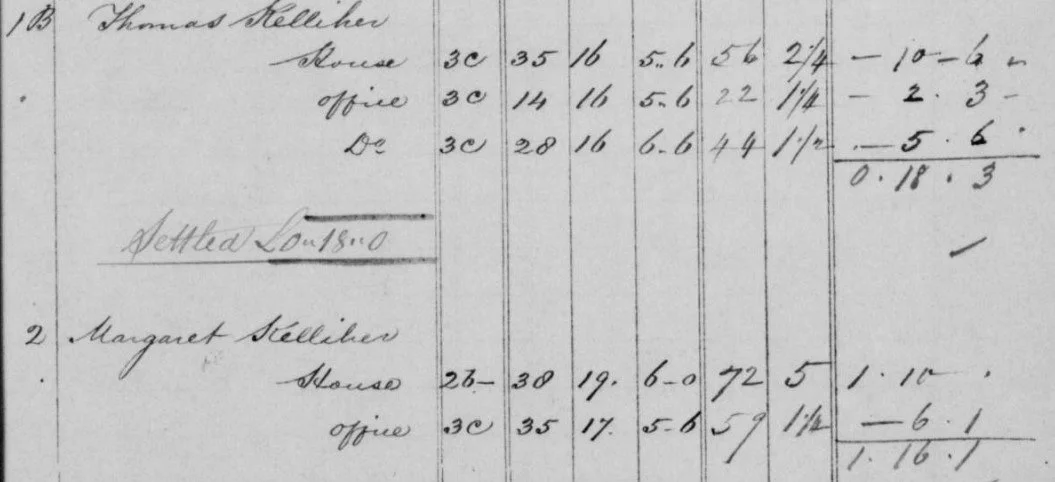
Excerpt from an 1852 House Book.
The 1926 Irish census was the first census taken in the Irish Free State (this does not include the six counties of Northern Ireland). Prior to that, the most recent census was 1911, taken while Ireland was still part of the UK. The gap of 15 years feels like an eternity in genealogical research. Per the Statistics Act of 1993, the census will be released 18 April 2026, one hundred years after it had been administered. The National Archives of Ireland has worked to digitize and transcribe the 1926 census in preparation for its release on 18 April. The census returns were digitized with archival-grade scanners to ensure a high resolution of the image. Then, using OCR (Optical Character Recognition) software the forms were transcribed, so that they are fully searchable. When the census goes “live” on the National Archives website you will be able to search for your ancestors by name, county, townland, district electoral division, or age.
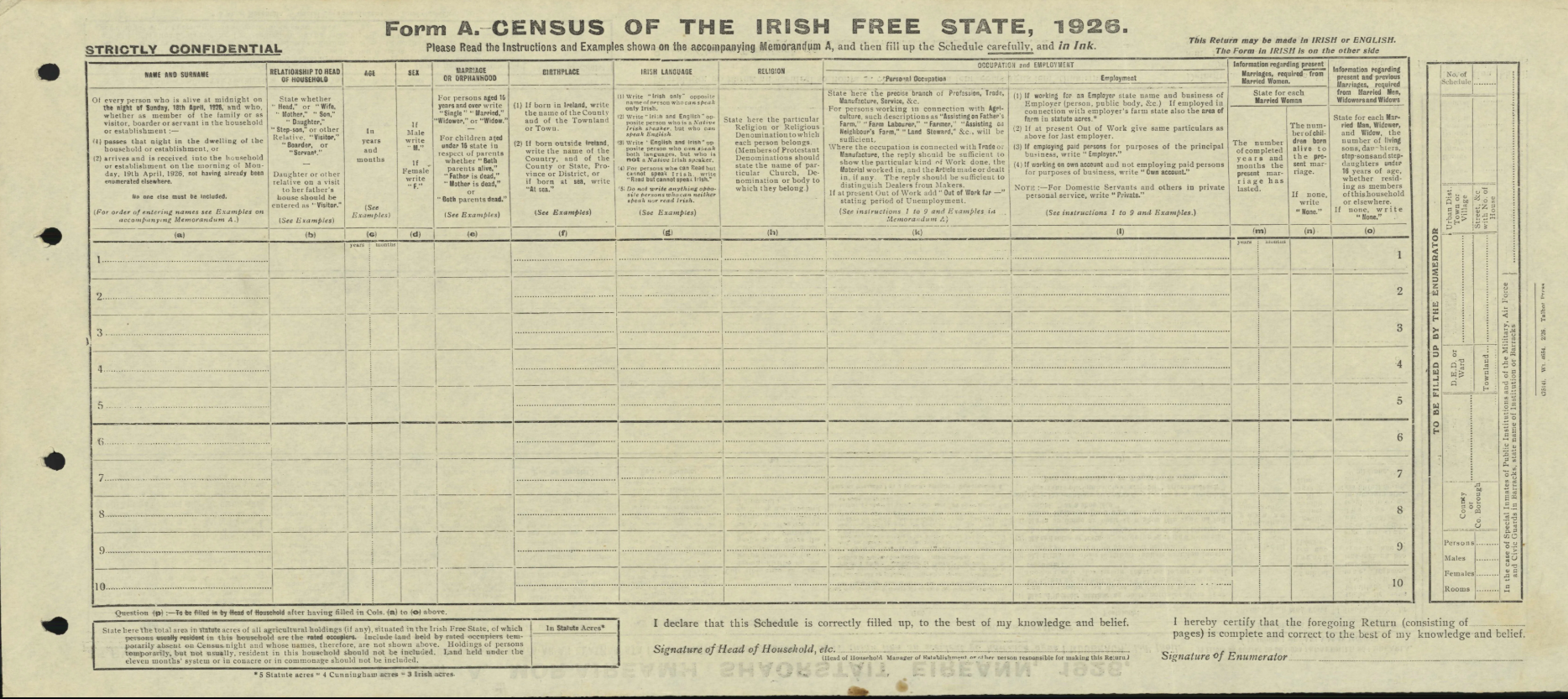
The 1926 Ireland Census Form
The 1926 census will include households, relationships, birthplaces, religion - valuable information for research of your family. This is especially significant as parents’ names (and often maiden names) are not included on Irish civil death records. This census will help trace households and residences of the siblings, parents, or cousins who remained in Ireland. The census will also include those all important FAN (friends, associates, and neighbors) club members. The neighbors in the townland may include surnames that you find with your ancestors in their new location, adding indirect evidence for finding your relative’s native townland.
Finding the place is always a challenge researching migrating populations, but Ireland can present unique challenges. The layers of jurisdictions can be confusing if you aren’t familiar. The best resource for drilling down localities is John Grenham’s website (johngrenham.com) — his Civil and Catholic parish comparison maps help visualize the different boundaries. Your ancestors may have used the Civil or Catholic parish name if they listed a residence. If they left the name of a townland, using logainm.ie can help you identify all of the townlands of that name across the island. It also helps by providing the native Gaelic spelling.
Even more exciting, if you can trace your ancestors forward enough to look at current Irish property records, you can purchase the property record for a specific lot at https://www.landdirect.ie/ for a nominal amount. To do so, however, you need to have a very specific location identified. Using the historical/modern overlay map from Griffith's Valuation you can see the shifting property lines, or the lines that don't shift, giving you a reference point for where your ancestors may have lived and their descendants may still reside. Using these tools I have been able to pinpoint the exact farmhouse at the end of a lane that I plan to stop at when I am able to make a trip to Ireland again. I have every intention of knocking at the door and asking if they know anything about my second great grandmother, Honora Kelliher.
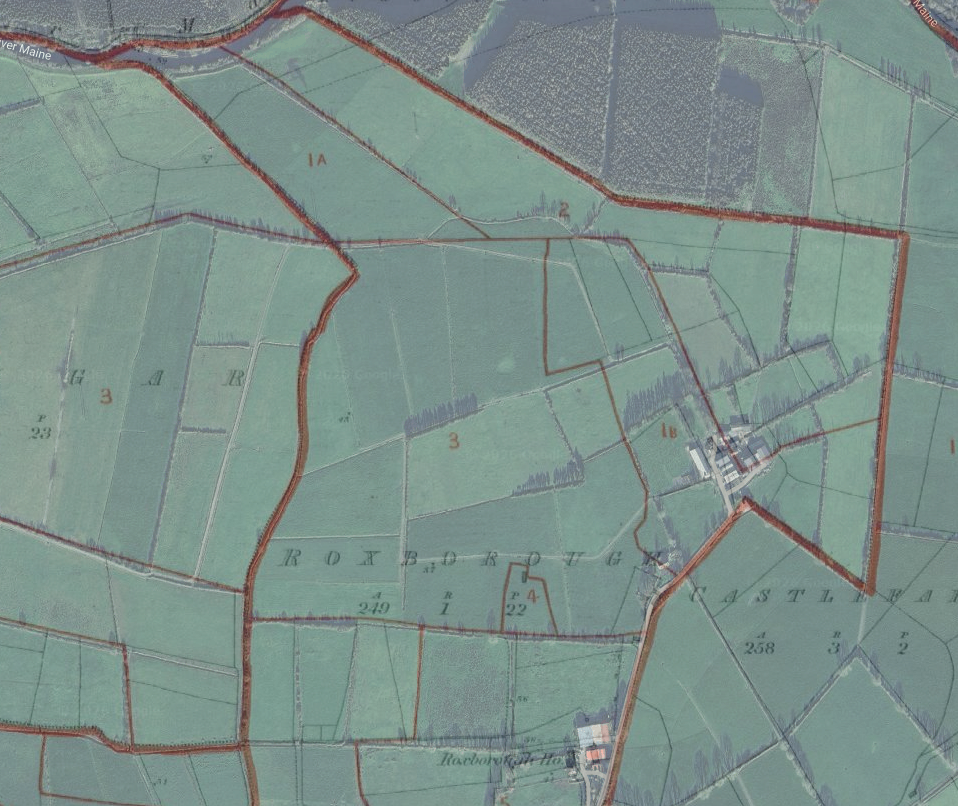
My second great grandmother’s native townland, using satellite view with Griffith’s Valuation maps.
Those of us who have done Irish research are creative researchers. We have learned how to access and use uncommon records and information to build our family trees, or construct hypotheses to test. Using the rent rolls housed in the National Library of Ireland can give you names dating back another century. The Tithe Applotment books can give you an idea of the kind of house your Irish ancestors inhabited in the early nineteenth century. DNA has become a valuable resource as more Irish test. Family surname projects, county-specific social media groups, and genealogical societies provide valuable resources as we pursue the faint clues our ancestors left us. And sometimes, it really comes down to simply having the luck of the Irish with you. If you have Irish ancestors that you haven’t found, or even if you have found them, I encourage you to explore this weekend’s release of the 1926 Ireland census. As with any newly available record group, you don’t know what gems might lurk within their records. And if you’d like a guide through that process, that’s exactly what Chart Your Heritage is here for.