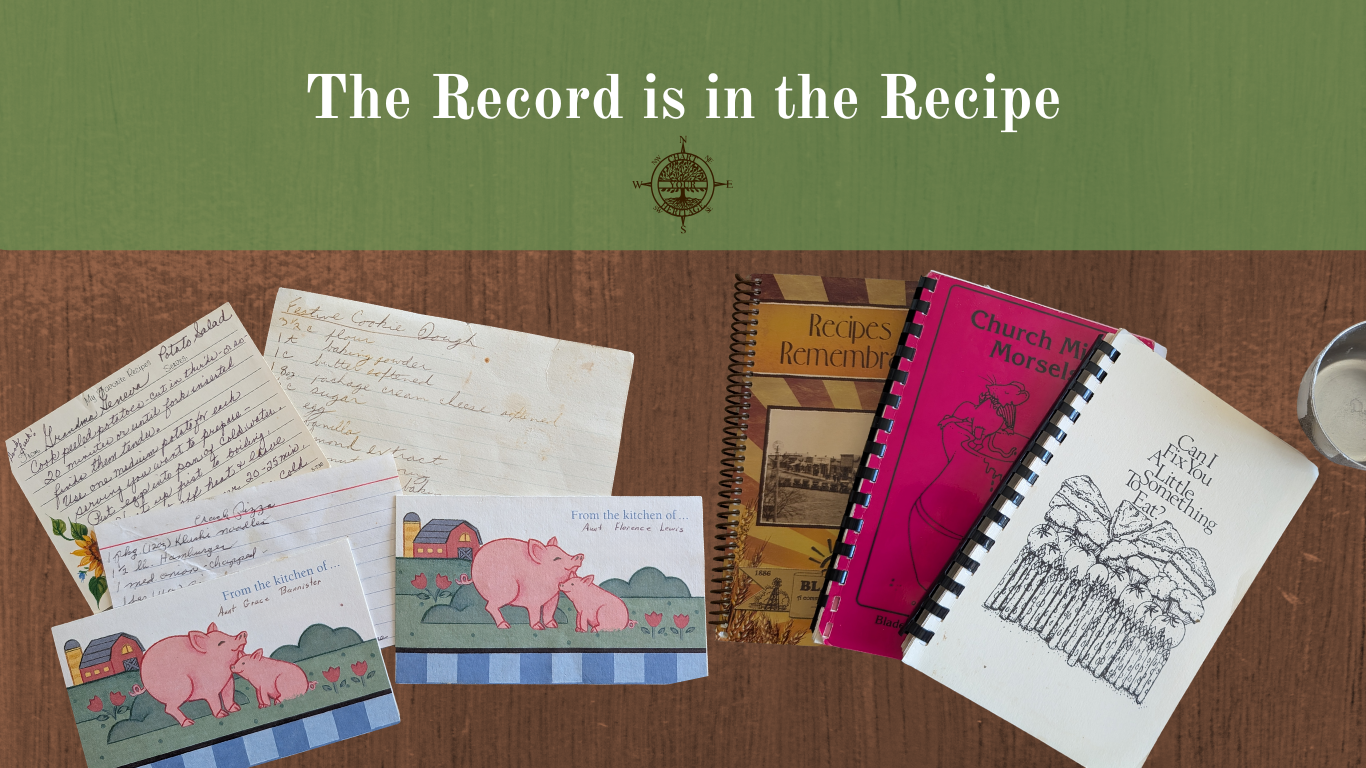
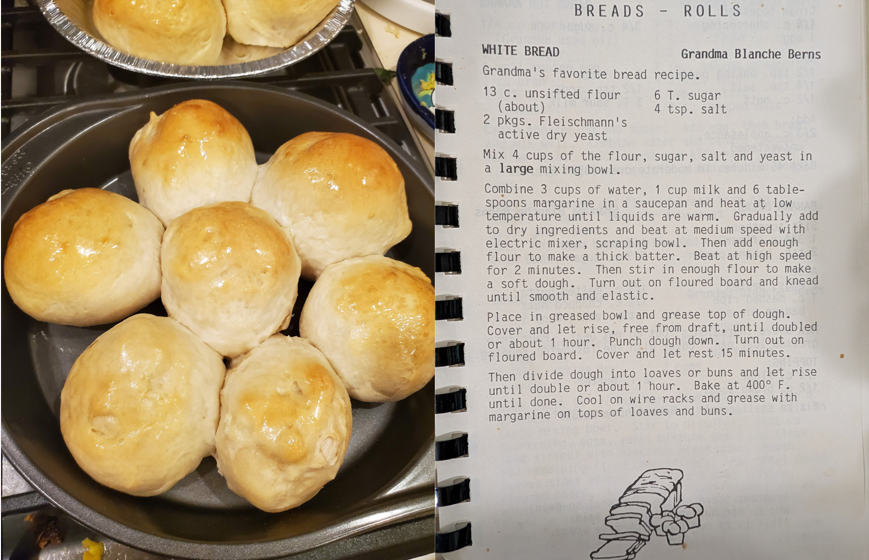
I love a good cookbook, it is one of my weaknesses. So when I go to my shelf of cookbooks and recipes it can be dangerous pulling out something. It is amusing too because I tend to revisit just a few of them. So when I went to look for my Easter recipes I not only experienced an avalanche but realized I am going for my tried and true family cookbook. We enjoy eating, and maybe even more, we enjoy cooking and baking for the people we love. Certain foods I associate with certain family members. Grandma Dora always made the best pies. Grandma Geneva’s brown rolls were my favorite. As I pick out what to make for Easter brunch I pull the family cookbook from my shelf—reminding me of all the recipes that come from family and are a link to our ancestors’ lives.
My wedding shower provided a plethora of these recipes. Everyone shared a favorite recipe with me and many were notated “Grandma Louise’s” or “Aunt Wanda’s”—recipe links to these family members that I may never have met. These were of course in addition to the Berns family cookbook, a compilation of three generations’ favorite dishes in one handy book. Bonus: mine even has a note from the Great Aunt who gave it to me.
As I look at these I wonder why did that person make this? Is it something that indicates their origins? In Nebraska we have a regional fast-food chain that makes a hot pocket of spiced beef particular to a group of German Russians who migrated to the state in the late nineteenth century. Does your family cookbook, or recipe holder, contain foods that help indicate a country of origin or region?
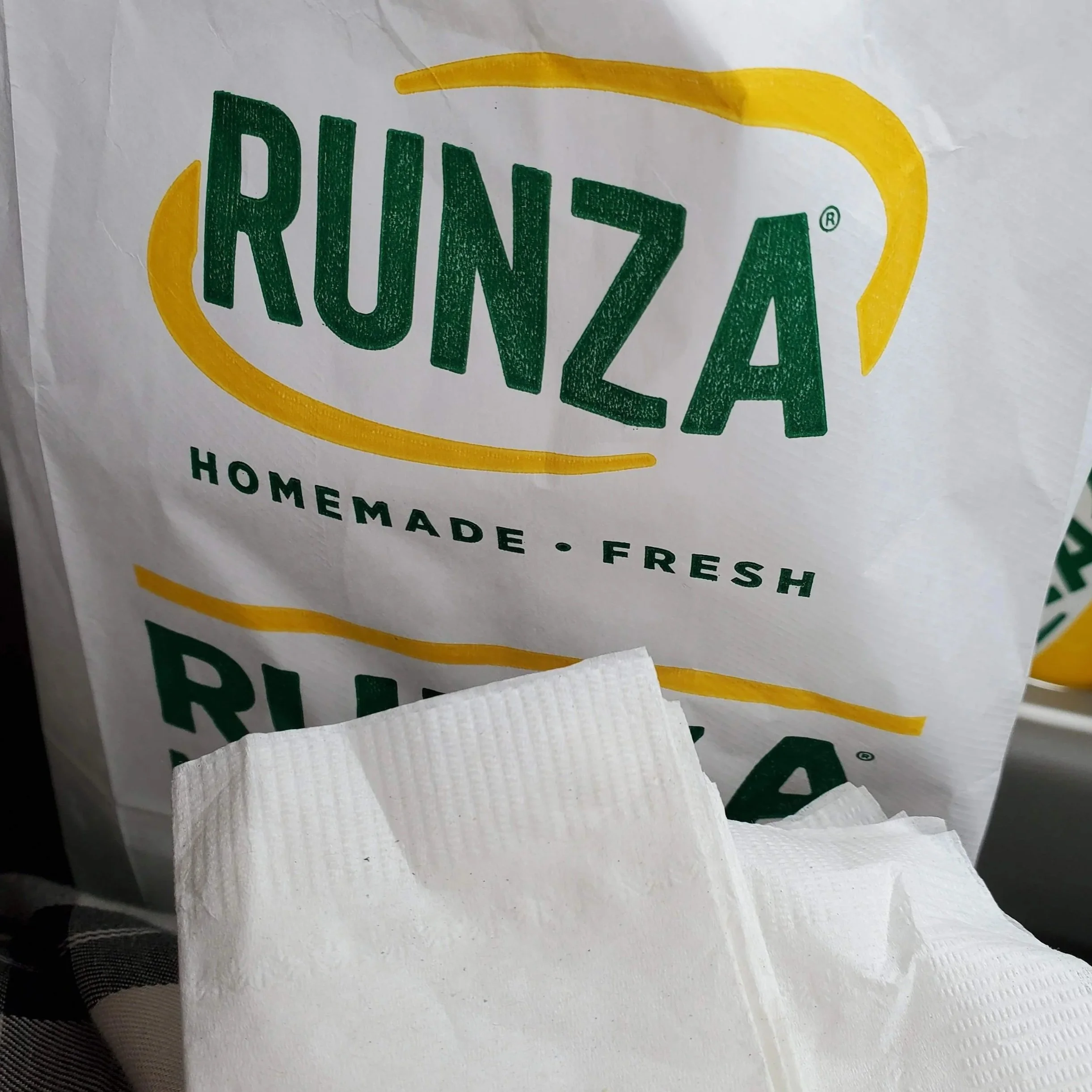
Several of my great-grandmother’s recipes are reminders of the era she lived in. My grandmother, the oldest child, was born in 1931, at the onset of the Great Depression and Dust Bowl. Four boys followed. Just feeding my two boys takes a large weekly Costco order. What might it have been like feeding five children during those hard times? She was a prolific gardener—likely what helped feed her family during those years. And in the 1930s, that garden wasn’t a hobby. It was how you fed five children when the dust came and the money didn’t.
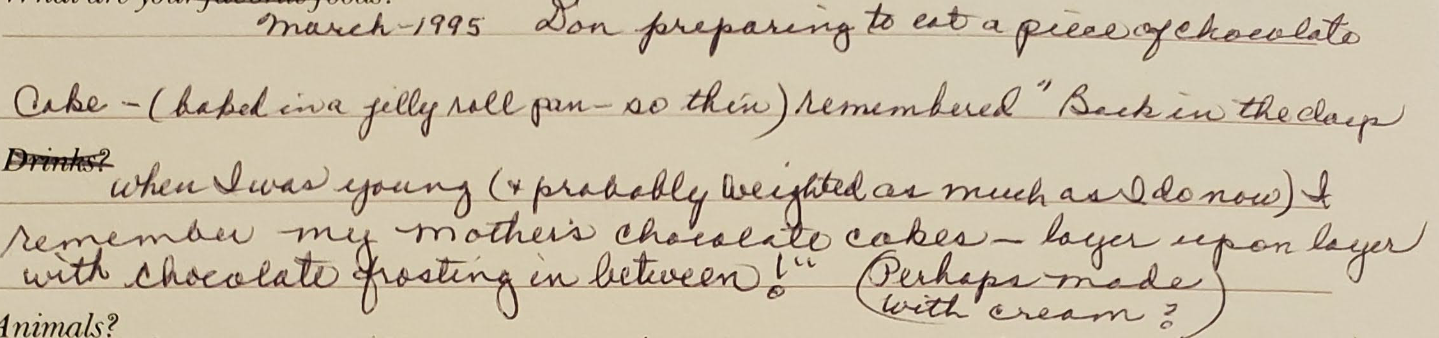
The recipes that have come down to you deserve their own place in your family history—copy them! These are originals, written in your ancestor’s handwriting—preserve that connection to your past. A stained recipe card, while not the easiest to read, demonstrates how often it was likely used. I know my cookbooks are the most sticky and stained on those recipes I use consistently. Sometimes you may find notes written—about the recipe, who likes it (David’s favorite) or an insight into their day. By all means—create a clean copy to use that is easy to read—but preserve those originals.
Who has a copy of that church or town cookbook? Usually these cookbooks will include the contributor’s name. This is your ancestors’ FAN club (Friends, Associates, Neighbors). If you don’t have one, check out the junk/thrift stores in your area of interest.
Are you having an Easter brunch or dinner with family this year? Take the opportunity to ask your relatives about the dishes on the table. Is one from Great Aunt Mildred? Why did you make it? Was it something she always brought? What is her story? Ask about the holiday traditions they had growing up. My father’s family was Catholic—their Lent and Easter looked very different from my mother’s Methodist upbringing. His mother was not Catholic but she maintained all of her husband’s faith’s traditions at her table. What was that like? Ask the questions, write them down, preserve the recipes. And, if you enjoy time in the kitchen, try out a few of those recipes!
The recipes are worth saving. But the stories behind them—who taught her that, why he always made it at Christmas, what it meant to feed a family through the Depression—those are worth capturing too. If you’d like help preserving yours, whether that’s a family history book, a research project, or just figuring out where Grandma Louise actually came from, that’s what I’m here for.